



Westside LA real estate ranges from Ocean Avenue condos near the coast to single-family homes farther inland, each with different tradeoffs in space, privacy, and location.
If you’re exploring luxury real estate in Westside LA, you may be contemplating how close you want to be to Santa Monica’s coveted coastline.
An Ocean Avenue condo puts you along the city’s coastal edge, near Palisades Park and the beach. Meanwhile a single-family home farther inland on the Westside may give you more private outdoor space, storage, and flexibility to make changes to the property over time.
Here’s how you should decide between these two options.
Table of Contents:
- Start with your home priorities
- Compare the costs and responsibilities of ownership
- Know what you can change around the property
- Factor in ocean views, square footage, future flexibility
- Compare actual properties side by side
- Consider where you spend your time in LA
- Make an informed buying decision, with guidance from Nili Hudson
Start with your home priorities
When you’re comparing an Ocean Avenue condo with a single-family home farther inland on the Westside, start with the practical differences that will matter most to you. Ask yourself these initial questions:
- How much maintenance do you want to take on?
- How important are private outdoor space, storage, and proximity to the coast?
- Are you living here full-time or are you away most of the year?
An Ocean Avenue condo may appeal to you if you prefer a mostly hands-off approach. The association typically handles exterior maintenance and common-area upkeep, while some buildings also offer staff and amenities that can make the property easier to manage when you’re away.
A single-family home farther inland may be the better fit if living space is top priority. A yard, garage, additional storage, or greater separation from neighboring homes may matter more to you than being right along Santa Monica’s coastal edge.
| Key consideration | Ocean Avenue condo | Single-family home elsewhere in the Westside |
|---|---|---|
| Private space | May offer a balcony or terrace, along with shared amenities; privacy depends heavily on the building and unit layout | May offer more private outdoor space, storage, garage space, and separation from neighboring homes |
| Location | Puts you along Santa Monica’s coastal edge, with Palisades Park and the beach close by | Moves you farther from the immediate coastline, with location varying considerably by neighborhood |
| Ownership costs | HOA dues add a recurring monthly expense and may cover building services, amenities, insurance, and reserves | Many homes don’t have HOA dues, and you’ll usually take on maintenance and repair costs directly |
| Renovation flexibility | Interior changes may be subject to HOA rules, building systems, and board approval | Generally gives you more flexibility to remodel or expand, subject to zoning, permits, and any property-specific restrictions |
| Where you spend your time in LA | Convenient if much of your time is spent in Santa Monica, Venice, or along the coast | May offer easier access to Brentwood, Westwood, Century City, Beverly Hills, the 405, and other inland destinations. |
Compare the costs and responsibilities of ownership
Condo ownership shifts many building-related expenses to the association, while a single-family home generally leaves more of those responsibilities with you. Neither option is automatically less expensive; the difference is largely in how those costs are organized and who manages the work.
With an Ocean Avenue condo, you’ll typically pay monthly HOA dues that help fund the building’s common expenses. What those dues cover varies, but they may include:
- Exterior and common-area maintenance
- Building insurance for shared portions of the property
- Common-area utilities
- Contributions to reserve funds for future repairs and major projects
- Building staff and amenities, such as a concierge, pool, or fitness center, where offered
With a single-family home farther inland on the Westside, you’ll usually manage more of these expenses directly. Many detached homes don’t have HOA dues, although some properties do belong to an association. Either way, you’re generally responsible for maintaining the house and grounds yourself or hiring professionals to do it.
Those expenses can include:
- Roof, plumbing, electrical, HVAC, and other major systems
- Exterior repairs and painting
- Landscaping, tree care, and pest control
- Homeowners insurance
- Pool or other outdoor-area maintenance, when applicable
Know what you can change around the property
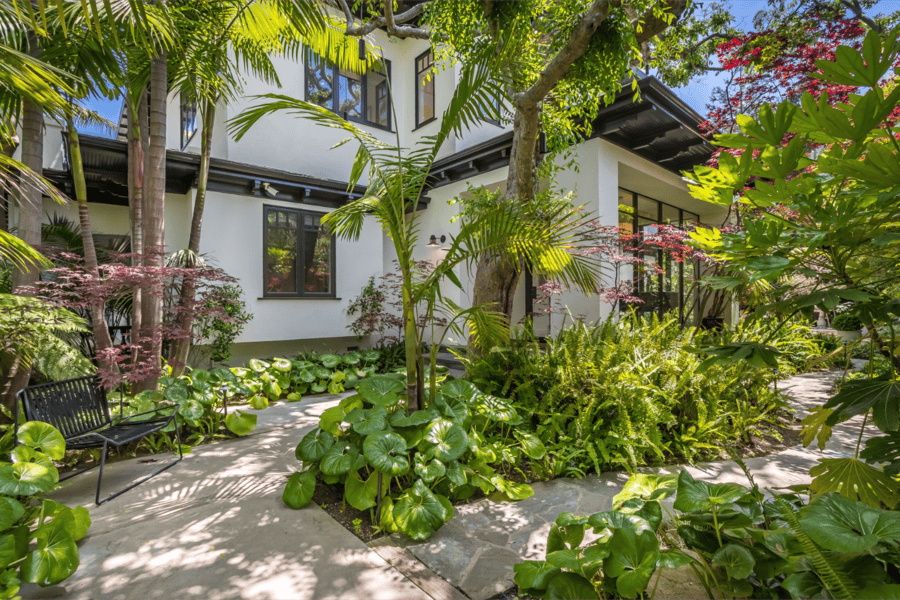
Single-family homes farther inland may offer more private outdoor space, along with greater separation from neighboring properties.
Renovation freedom can differ considerably between an Ocean Avenue condo and a single-family home farther inland.
With a condo, you may need HOA approval for:
- Flooring changes, especially when soundproofing is involved
- Plumbing or electrical work that affects shared systems
- Window replacements or other exterior-facing changes
- Contractor access, work hours, and renovation schedules
But before settling on a condo listing, review the association’s governing documents so you know which projects are allowed and what approval process is involved.
With a single-family home, you’ll generally have more flexibility to rework the floor plan, expand the structure, or add an accessory dwelling unit (ADU). You’ll still need to comply with zoning, permits, easements, and any property-specific restrictions, which vary across the Westside.
Factor in ocean views, square footage, future flexibility
On Ocean Avenue, view orientation can have a meaningful effect on both buyer appeal and resale. Floor level, exposure, and whether the ocean view is unobstructed can all influence how one unit compares with another in the same building.
Farther inland, a single-family home may put greater emphasis on:
- Additional living space
- Private outdoor areas
- Garage and storage space
- Greater separation from neighboring properties
If resale value is more of a priority, go for an Ocean Avenue address. A great waterfront view is a major selling point that can help distinguish one condo from competing units and support its value over time. Because an unobstructed view is a finite attribute that can’t be added later, buyers may continue to place a premium on the best orientations within a building. That can help a well-positioned unit maintain a pricing advantage over comparable units with partial views or no ocean exposure.
If you might rent the property later, check the rules before you buy. Some condo associations limit leasing, require minimum lease terms, or restrict how many units can be rented at one time. A single-family home may give you more independence, although local rental regulations and any applicable HOA rules still matter.
Compare actual properties side by side
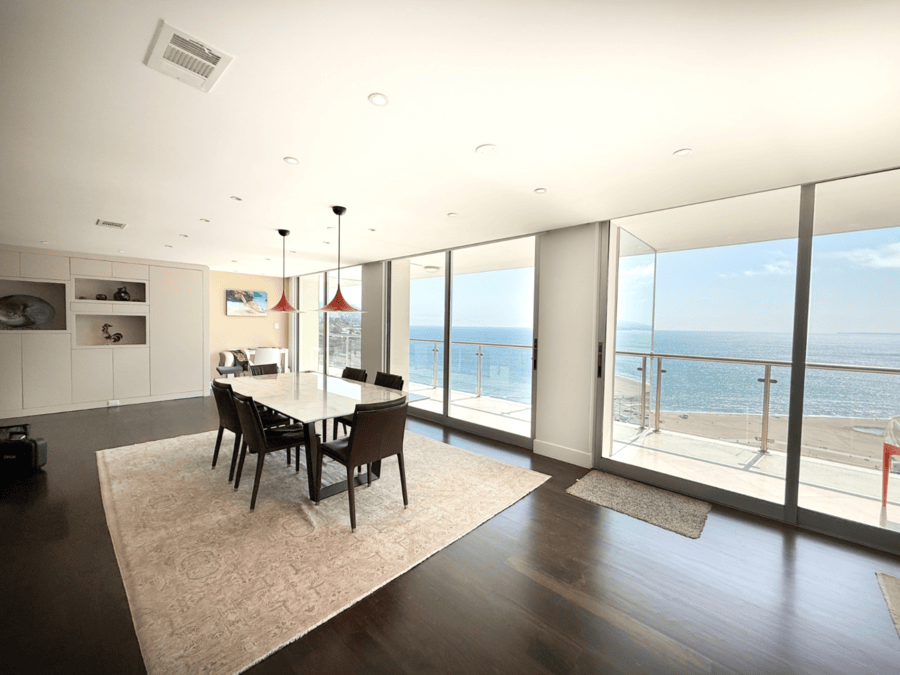
Ocean Avenue condos may offer ocean views and close proximity to Palisades Park and the beach, often with less private outdoor space than a detached home
Once you’ve narrowed your preferences, compare a few Ocean Avenue condo listings with a few single-family homes farther inland. Looking at real listings makes the tradeoffs much easier to judge.
Take note of:
- Ownership costs – Compare property taxes, insurance, HOA dues, expected maintenance, and any known or pending assessments.
- Space and privacy – Look beyond square footage to storage, parking, outdoor areas, office space, and separation from neighboring properties.
- Rules and flexibility – Review HOA restrictions, renovation requirements, leasing policies, and the zoning or permitting limits that could affect future plans.
- Long-term options – Consider how each property would work if you later decide to sell, rent it out, keep it as a second home, or spend more time there.
Consider where you spend your time in LA
Living on Ocean Avenue puts you at the western edge of the Westside. That can be a major advantage if much of your time revolves around Santa Monica, the beach, Venice, or other destinations close to the coast.
But if you’re regularly heading toward Century City, Beverly Hills, Westwood, Brentwood, the 405, or points farther east, being several miles inland can change the rhythm of your week considerably.
Map the places you return to most often and test the routes at the times you’d actually travel them. A few examples:
- Your office or other regular appointments
- Restaurants, clubs, fitness studios, and shopping you frequent
- LAX and other routes you use when traveling
- Friends and relatives you see regularly
- The freeways and major corridors you rely on most
Make an informed buying decision, with guidance from Nili Hudson
The right choice depends on which tradeoffs matter most to you — coastal access, privacy, maintenance, flexibility, or how easily the property fits into the rest of your Los Angeles routine.
With more than 30 years of experience representing buyers across Los Angeles, I can help you compare properties with those differences in mind.
Make your Westside LA real estate transaction a breeze. Call me directly at 310.622.7422, reach out by email, or visit my contact page.