
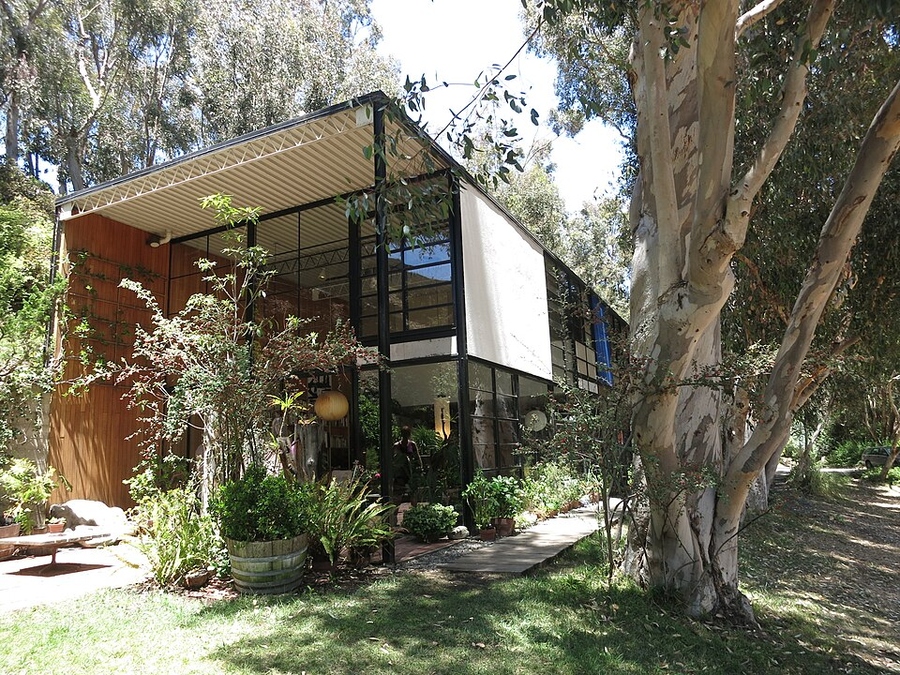
The 1949 Eames House in Pacific Palisades pairs steel and glass with a strong indoor-outdoor connection, hallmarks of postwar Los Angeles modernism.
Los Angeles has long been a canvas for architectural innovation, shaped by a mild climate, dramatic hillsides, rapid 20th-century growth, and a willingness to experiment. Landmarks such as the Eames House, Stahl House, Gamble House, and Adamson House show how different eras and design movements took root across the greater LA region.
Whatever home style you’re drawn to, recognizing these architectural nuances allow you to explore the local real estate market with a sharper eye.
This short guide looks at the major styles that shape LA architecture, with a closer look at Santa Monica and Westside coastal design — and what buyers should evaluate beyond architectural character.
Table of Contents:
- Which Los Angeles architectural styles buyers should recognize
- How the climate, canyons, and coast shaped Los Angeles homes
- What buyers should evaluate beyond architectural style
- What to check before purchasing an architecturally significant home
- How Los Angeles architecture carries over into condos in Ocean Avenue, Santa Monica
- Find the right Los Angeles home that fits your lifestyle
Which Los Angeles architectural styles buyers should recognize
Spanish Revival and Spanish Colonial Revival became especially influential in Southern California during the early decades of the 20th century. Stucco walls, red clay tile roofs, arched openings, courtyards, and decorative ironwork helped adapt European and Mediterranean precedents to the region’s climate. Malibu’s 1929 Adamson House is a particularly vivid example, known for its extensive use of locally made Malibu Potteries tile.
Craftsman homes, on the other hand, emerged from a different design philosophy — emphasizing natural materials, visible workmanship, and a close relationship between house and site. Wide porches, low-pitched roofs, exposed structural details, built-ins, and extensive woodwork are common hallmarks. The 1908 Gamble House in Pasadena, designed by Greene and Greene, remains one of Southern California’s best-known examples of the Arts and Crafts tradition.
Modernism took shape in LA well before the 1940s, but the movement reached one of its most recognizable expressions in the Midcentury Modern homes of the postwar era. Early experiments by architects such as Frank Lloyd Wright and R.M. Schindler explored open planning, unconventional materials, and stronger connections between interiors and the landscape.
These modern movements became even more prominent after World War II, particularly through:
- The Hollyhock House and Schindler House had already explored open planning, unconventional materials, and stronger connections between interiors and the landscape.
- The Case Study House program, launched in 1945, pushed those ideas further in the postwar era. The 1949 Eames House in Pacific Palisades and the 1960 Stahl House in the Hollywood Hills helped make steel framing, expansive glass, and indoor-outdoor living enduring features of LA residential design.
Contemporary homes and new construction draw from a much wider range of influences. Some continue the modernist emphasis on open plans, large expanses of glass, and strong connections to outdoor space, while others combine those ideas with newer materials, energy-efficient systems, and changing expectations around privacy, flexibility, and low-maintenance finishes.
How the climate, canyons, and coast shaped Los Angeles homes
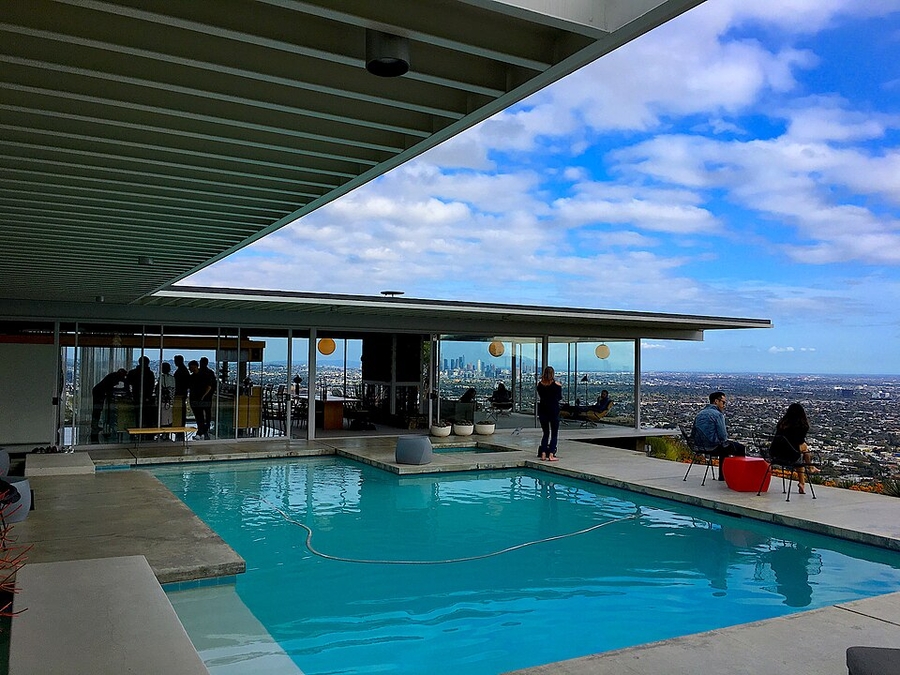
The 1960 Stahl House in the Hollywood Hills uses expansive glass, an open plan, and its hillside setting to frame the surrounding views.
Southern California’s mild climate has long encouraged homes to open outward. Courtyards, patios, terraces, and large openings between interior and exterior spaces appear across several architectural traditions, from Spanish Revival homes to postwar modernist residences. In many cases, outdoor areas function less as decorative extras and more as extensions of the living space.
Meanwhile, hillside and canyon sites created a different set of design challenges. Architects often had to work with steep grades, irregular lots, and changing elevations, leading to split-level plans, elevated decks, retaining structures, and, in some cases, cantilevered rooms. These solutions were as much about adapting to the site as they were about capturing light or views.
And along the coast, builders and designers had to account for a different set of conditions. In Santa Monica and other Westside communities, ocean exposure can accelerate corrosion and weathering, making exterior materials, window systems, finishes, and ongoing maintenance especially important.
What buyers should evaluate beyond architectural style
Architectural style can tell you a great deal about a home’s character, but it doesn’t tell you how functional or practical that property is. Even identical builds can feel different once you account for real-world factors like:
- Natural light and sun exposure – Consider which direction the main living spaces and large windows face. Western exposure can bring strong afternoon light and heat, while other orientations may affect how bright particular rooms feel throughout the day. In denser neighborhoods, window placement can also affect privacy.
- View orientation – Pay attention to which rooms have good views, whether balconies or terraces are positioned to take advantage of it. Additionally, check whether neighboring buildings, trees, or future development could affect sightlines. In coastal properties, orientation can also influence glare, heat, and wind exposure.
- Layout over square footage – A larger home isn’t necessarily a more functional one. Long hallways, awkward staircases, poorly placed bedrooms, or disconnected living spaces can reduce the amount of square footage you’ll actually use. Pay attention to how easily you can move between the kitchen, living areas, bedrooms, and outdoor spaces.
- Terrain and access – On canyon and hillside lots, look at how the site affects movement through the property. Multiple flights of stairs between the garage and kitchen, limited flat outdoor space, or bedrooms spread across several levels may work perfectly well for one buyer and prove frustrating for another.
- Construction and renovation quality – Look closely at how original and renovated portions of the home meet. Window installations, additions, exterior drainage, flooring transitions, and changes to walls or openings can offer clues about whether past work was carefully integrated or simply added over time.
What to check before purchasing an architecturally significant home

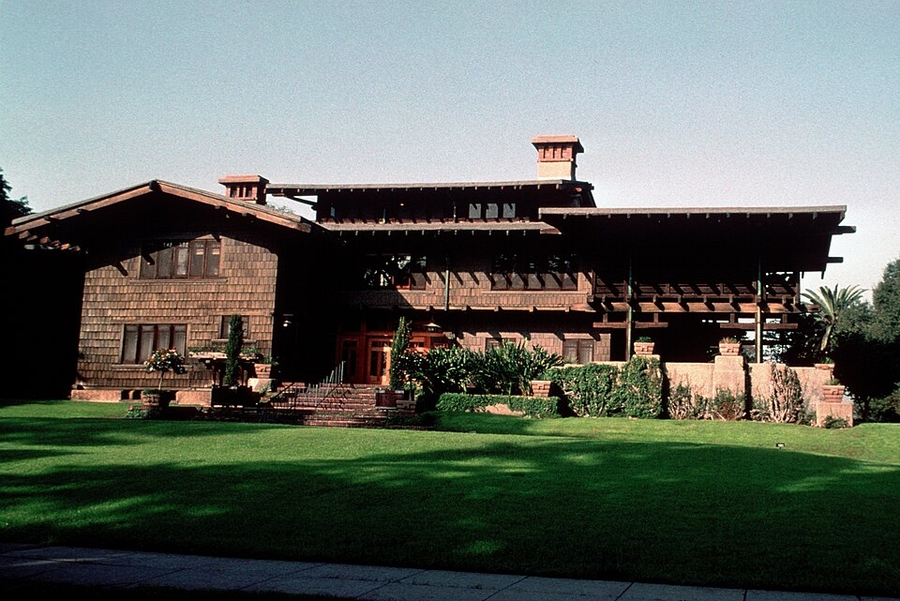
The Gamble House in Pasadena shows how Craftsman design helped shape early Los Angeles-area architecture through woodwork, broad eaves, and handcrafted detail.
Distinctive architectural details can make ownership of an older — and perhaps historic — home very appealing. However, that can affect what you’re allowed to change and how much the property will cost to maintain.
If you’re considering an opportunity to buy this kind of home , it’s worth looking beyond the finishes and understanding the property’s provenance — who designed it, how it has evolved, and whether later alterations respected the original architecture — along with how it’s been maintained over time.
| Key consideration | Why it’s important | What to check before buying |
|---|---|---|
| Past renovations | Older homes may have been expanded, reconfigured, or updated several times. Some alterations may be well integrated; others may have changed the original layout or introduced new maintenance issues. | Review available permit and inspection records for major work. They can help establish what was approved, but they won’t tell you whether the work is still in good condition, so altered areas should also be evaluated during inspections. |
| Historic-preservation rules | If a property is designated as historic or falls within a preservation district, some exterior changes may require additional review or approval. Homes located in LA Historic Preservation Overlay Zones (HPOZs) or Santa Monica preservation districts face stricter rules on exterior changes. |
Confirm the property’s status before planning changes to windows, exterior finishes, additions, landscaping, or other visible features. In LA, this may include properties within a Historic Preservation Overlay Zone; Santa Monica has its own landmark and historic-district rules. |
| Specialized maintenance | Original clay tile roofs, custom glazing, period woodwork, and other architectural details may require specialized materials or tradespeople. Near the coast, exposure to salt and moisture can also increase maintenance demands. | Ask which features are original, what’s been repaired or replaced, and whether past maintenance records are available. For coastal properties, pay particular attention to corrosion, exterior finishes, windows, and other weather-exposed components. |
| Architectural pedigree | A well-known architect or documented design history can add interest, but it doesn’t make a home automatically functional or well-maintained. | Evaluate the fundamentals first: structural condition, layout, lot, renovation history, and the practical demands of owning the property. |
How Los Angeles architecture carries over into condos in Ocean Avenue, Santa Monica
LA residential design has long emphasized light, views, and a close relationship with the outdoors. In Santa Monica’s coastal condo market, those same priorities show up in expansive glazing, terraces, open living areas, and floor plans oriented toward the ocean.
Here are some of Ocean Avenue’s better-known examples that show that range.
- The Waverly, 1705 Ocean Avenue: A contemporary development completed in 2014, with architecture by Moore Ruble Yudell and interiors by Marmol Radziner.
- The Seychelle, 1755 Ocean Avenue: Another 2014 development, pairing ocean-oriented residences with terraces, a rooftop pool, and landscaped common areas.
- Ocean Towers, 201 Ocean Avenue: Built in 1971, this two-tower property represents an earlier generation of full-service Ocean Avenue living.
A condo can offer a compelling mix of location, stunning ocean views, luxury amenities, and less direct responsibility for exterior upkeep than a single-family home.
If you’re considering a property purchase in this coveted stretch of Santa Monica, get in touch with me, Nili Hudson.
Find the right Los Angeles home that fits your lifestyle
The right home should work for the way you live, respond well to its setting, and make sense to maintain over time.
If you need an Ocean Avenue, Santa Monica Realtor, look for someone who understands LA real estate and has represented distinguished clients for over 30 years. I specialize in luxury condos across Santa Monica and the Westside, helping buyers evaluate everything from orientation and renovation history to HOA restrictions, reserves, and long-term upkeep.
Let’s make your next real estate investment a breeze. Just call 310.622.7422, email me, or visit my contact page to tell me what you need.